All posts by Elise

Responding to Reviews

Watch, I’m psychic. You think I’m going to tell you not to be the author who declares war on her best publicity tool:

Or not to engage in this passive-aggressive version:

…And you’re right. I don’t want you to do those things. But honestly, you’re reading the Shimmer blog, which means you’re smart enough that you probably don’t need me to remind you those are bad ideas.

So “don’t freak out at bad reviews” is only part of what I want to tell you. There are other ways to respond to reviews that might negatively impact your career, and I’m going to illustrate them with more cheesy cartoons.

Sometimes authors think that appearing reasonable is a good idea. Perhaps he’d like to seem like the kind of guy who uses criticism to improve himself. It’s not a good idea to comment even in agreement with criticism, however…


Readers who are normally too lazy to send you a whiny e-mail will be only too happy to complain to you now–after all, you’re right there in front of them, and since you listened to the reviewer, maybe you’ll listen to everybody! And now you HAVE to answer EVERY question, or it will look like you’re picking favorites, or like you’re sulking, or like you decided you were too good to come back and read the replies… You can’t win.

The best way to respond to a negative review is to get a photo of the reviewer from Google Images, print it out at work so you’re not even paying for the paper, and then use it for toilet paper after All-You-Can-Eat Shrimp Night at the Mexican seafood restaurant down by the docks.

(No, I’m not going to illustrate that one. Use your imagination.)

What if you get a positive review, one like this?


You might be tempted to thank the reviewer in a comment, or perhaps privately, through e-mail.

…Let’s not.

Every day, the Google Alert spell of “Summon Author” is cast all across the Internet. Authors see their name in someone’s blog, then pop up and say something before disappearing–or are they only invisible?

Imagine for a moment what it’s like to be a fan who gets a blog visit from their favorite author. (Hi, Scott Lynch!) Awesome, right? Now imagine what it’s like for a police detective to get a friendly phone call from the mafia (Hi, Joey the Fist). Okay, okay, it’s not that bad, but responding to a review isn’t good, either. The reviewer’s job is to monitor fiction and determine its quality, then pass that information on to readers. Authors are not part of this equation, and there are a couple of good reasons for that.

One is that if you are friendly to a reviewer, you’re initiating a personal connection, and now it’s in their professional best interest to stop reviewing your work, or at least to add a caveat about their bias. After all, once you’re a friendly acquaintance or a real friend, they’re no longer impartial. (This doesn’t mean you should avoid them like space herpes, but remember: reviewer friends doesn’t mean friendly reviews–it means LESS reviews.)

The second reason will make the most sense if you put yourself in the reviewer’s place. Reviewers are people, and while they know that you’ll see their reviews (or at least that you might), they should have the freedom to evaluate your work and comment on it without being afraid of possible retaliation. If you’re friendly once, it doesn’t mean you will be next time. And now they know you’re watching them and that you’re willing to insert yourself into a conversation where you weren’t invited.

Do you really want to be an unwelcome guest?


If you want to show off a good review, do so! There’s nothing wrong with pointing more readers toward the review–the readers belong in that conversation.

If you’re brave (hi, Jay Lake!) you can even link to your bad reviews. As long as you’re not trying to stir your fans into a ferocious horde, you’re still doing the same thing as when you linked to the good reviews: sending readers to reviewers.


Most authors would rather the readers didn’t find the bad reviews, but there are benefits. Sharing all reviews means more web traffic with your name as a key word. It makes you look humble and magnanimous. And it means that a reviewer who gives your work one star this time might like your attitude enough to try another of your stories, even though they found the first one an abysmal disappointment.

And maybe that second book will be the wombat phone book that wins their heart.
For the Birds

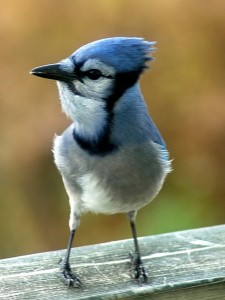
Blue jay, by Lucie G

Every morning, my porch is a flurry of wings and tails. Birds and squirrels and it’s a mad dash to the peanuts and the bird bath, especially the latter now that the temperatures are warming up and the water is no longer iced over. This morning, there has been an especially vocal blue jay, a bird I haven’t seen in months and months, ever since my neighbor (the Blue Jay Whisperer) moved. But here’s one now and he’s singing his little heart out.

At least until the crows show up. He goes quiet then, and the crow song dominates. Another crow arrives. A hearty crow conversation is had at loud levels.

“You didn’t tell me Jay would be here…”

“I didn’t kn–”

“At least we’re not wearing the same thing.”

The blue jay watches from a high branch, pondering, but he doesn’t leave. He sits the crows out and when they’ve taken their peanuts and gone, he sings again, then swoops down for a peanut of his own.

One of my favorite writing books is Bird by Bird, by Anne Lamott. It’s a book I come back to, especially when my creativity ebbs. It’s a way of refilling the well, of taking stock of what I do well, and applying that to the page. What did this blue jay teach me about writing this morning?

1. We aren’t all crows. Crows are big and loud and they pretty much go where they want to. The blue jay is smaller, but brighter. The crows are glossy, but the blue jay looks like he’s been painted with some care, whereas the crows were simply dipped. Both birds are pretty in their own way–different, distinct.

2. Your time will come. The blue jay comes in to grab his peanut but then bam, the crows return, startling him back up into the branches. He sits, watching and waiting, and when they go, it’s his turn again, to swoop down and be noticed.

3. You can get feedback from unexpected sources. The blue jay and the squirrels seem to have an accord. The jay perches on the fence with them sometimes and they watch each other as they take peanuts. The squirrels chitter. The blue jay sings. They seem to listen to each other, even though at first glance they have nothing at all in common but for their love of peanuts. Maybe that’s enough.

4. Write, even if you don’t think anyone is reading you. I can’t see the blue jay now, but every so often, I hear him. Even unseen, his song is heard and appreciated, probably by more than just me. And there he goes again. Singing. Singing.

You Do Not Write in Vain

Either I am writing or reading slush, at least that’s what I like to tell myself. In reality, I spend more time thinking about writing, more time thinking over the dozens of rejections I have received. Days, sometimes weeks are lost to a frozen paralysis where I wonder what the point is. It is difficult to write, and once you have written still more difficult to get published.

If I am lucky the rejections are like this:

We like your writing but…

If I am not, they are just rejections. Either way I am left to wonder what I am doing and why I do it.

In this mood I read slush. I read carefully, because I believe in the sanctity of the written word, the honor of carving out the time to sit down and write in the face of jobs, homework, dirty dishes, and a dozen other duties.

There are days when I rage because it’s clear the writer just flung words at the page—copious spelling errors, stories with ill-thought out plots, stories that are the wrong genre. Mostly, the stories are clean, well scrubbed in the way of children who are brought up with great care. In each of them there is something to love and something to fight for.

But the statistics simply aren’t in the writer’s favor.  Out of the 150 or so stories I’ve read for Shimmer, I’ve recommended twenty or so to the board. Of those twenty, three have made it in.

There are stories I loved never submitted to the board, simply because they weren’t right for the magazine, or passages that shone like gemstones were scattered across the page instead of linked together in careful chains, or the chains were there but the gemstones were dull, things I’d seen before, but the chains in and of themselves are finely wrought, worthy of respect. Mostly it is with great sorrow that I write rejections.

I aim for transparency. This is what worked. This is what didn’t. This is what I liked personally, but this isn’t what works for Shimmer.

I try not to think about how rejections are like little bombs in an inbox that explode, casting pall over the day. I imagine the writers are stronger than I am, better able to weather rejections and keep going.

Then the rejection is sent and it’s over.

Sometimes though, the stories linger in my mind, stay for days, sometimes weeks like the faint lavender aroma that sticks to your clothing.

I tell these stories to my friends, quoting my favorite passages—guys, you’ve got to listen to this—but mostly I roll them around in my mind, savoring the twists and turns, the new doors they have flung open in my mind, the secret shameless conversations of garden plants, imaginary cities hidden between doorways and alleys where sages dispense ridiculous wisdom, the infinite possibilities written in the night sky.

And when I go out into the world, I look at the trees and the sticks and stones and think of your stories, the hidden dimensions they brought to the most ordinary of objects, the most ordinary of people. The world is stranger, newer, full of mysteries I never saw before and I am so glad that I got a chance to read your stories even if Shimmer could not publish them.

Keep writing. We’re reading.

#

Writing image by Habbi-Stock on dA.

Five Authors + Five Questions : Advice

Writers write. It’s what we do. To go above and beyond that, by answering interview questions they receive in email, is astounding indeed! For this round of Five Authors/Five Questions, I’ve barged into the workdays of Louise Marley, Lavie Tidhar, Lisa Mantchev, E.C. Myers, and Jay Lake.

#

Question five: If you could give new(er) writers one piece of advice for the coming year, what would it be?

Louise Marley: Write what you love!  Write what you’ll be proud to have written.  There are no guarantees in this show-business profession.  Maybe you’ll have a bestseller, maybe you’ll have a movie deal, maybe you’ll write a wonderful book that never gets the notice it deserves.  You simply can’t predict, and anyone who tells you they CAN predict these things is wrong.  What we can be certain about is that we, as artists, strive always to create something of value.  And have a heck of a lot of fun doing it!

Lavie Tidhar: Take a risk. Write something that makes you uncomfortable.

Lisa Mantchev: The same as always: treat it like a job. Put in the hours. Do the research. Behave professionally.

E.C. Myers: Set reasonable goals for yourself. You can’t control how many stories you sell, but you can control how many you write or submit. There’s no guarantee that you’ll get an agent, but you can decide to send three queries a week. You might not sell that novel, but you can make sure it’s the story you wanted to tell and it’s as good as it can be before going on submission.

Jay Lake: Write more. Whatever you’re doing, do more of it. Also, the time to write is there if you make it a priority in your life.

#

What would you tell a fellow author? Leave us a comment! My deep thanks to the authors for an amazing five weeks of questions and answers! Who will I pester next? Stay tuned!

Five Authors + Five Questions : Success

Writers write. It’s what we do. To go above and beyond that, by answering interview questions they receive in email, is astounding indeed! For this round of Five Authors/Five Questions, I’ve barged into the workdays of Louise Marley, Lavie Tidhar, Lisa Mantchev, E.C. Myers, and Jay Lake.

#

Question four: What would a successful year of writing look like to you?

Louise Marley: The perfect year would be a completed novel and perhaps two or three short stories.  I don’t think I’ve ever been more prolific than that.  A more businesslike writer would probably talk about sales, but I tend to let the publisher worry about those, as there’s only so much I can do about them.  I like having a year in which I can look back with pride on my output, and look forward with some confidence as to where that work will appear and how my readership will react to it.

Lavie Tidhar: There are two ways to look at this. One is, can I pay my rent? The other–have I written something I am profoundly happy with?

A good year would answer the second in the positive. A great year would answer both!

Lisa Mantchev: One new book out in hardcover, another in paperback. Starred reviews are nice. My next goal is to hit one of the bestseller lists. When that happens, I am going to get the phoenix tattoo on my back enhanced.

E.C. Myers: Probably like some other writer’s career… But in all seriousness, I would say that “success” comes from writing stories that I’m proud of, that are better than what I’ve written before, that no one else could have written. Sales are wonderful, but they’re largely out of my control. I can’t sell anything if I don’t have good work to submit. If I could publish at least one novel a year and a story or two in magazines that I love, and maybe attract some compliments or recognition along the way, I’m doing pretty well. Someone, probably one of my Clarion West instructors, said that as your career progresses, your idea of success changes. You always want a little more than you have: more sales, more foreign sales, more awards, more popularity, maybe an agent or a movie option. It’s human nature and not necessarily a bad thing, because if you don’t give in to jealousy or despair, it only drives you to work harder, write more, and push yourself to improve and develop your craft. Just like every project is different, every writer is different, and it’s not usually beneficial to compare your progress to someone else’s, especially when you don’t know what they’ve had to do to get where they are.

Jay Lake: Well, last year I held down a full time job, parented a teenager, had liver surgery and six months of chemotherapy, crammed in a fair amount of travel prior to being sidelined medically (including being co-host of the Hugo awards), blogged about 250,000 words, and wrote about 250,000 words of first draft fiction. My original plan, had I not experienced another cancer metastasis, was to write 600,000 words of first draft fiction. So was last year successful? I didn’t meet my original plan goals, but I was still pretty productive in the face of some serious medical challenges.

More loosely, I would consider a year with two novels and two dozen short stories drafted, plus revisions on prior work, to be successful.

#

How do you define success? Leave us a comment! Next Wednesday, we wrap up these five questions with a bit of advice for new(er) writers. Stay tuned.

Five Authors + Five Questions : You Pantser

Writers write. It’s what we do. To go above and beyond that, by answering interview questions they receive in email, is astounding indeed! For this round of Five Authors/Five Questions, I’ve barged into the workdays of Louise Marley, Lavie Tidhar, Lisa Mantchev, E.C. Myers, and Jay Lake.

#

Question three: Do you outline or are you a “pantser”? How much planning and prep goes into any given project, and is the process any different for novels vs. short stories?

Louise Marley: I write very little short work, and I would say I never outline those pieces.  It doesn’t hurt to be a pantser with short fiction, because the commitment is so much shorter.  I do, however, have a quite specific process with novels.

I’m a hybrid!  I’m a pantser in the main, but I always have an outline to help keep me organized.  What I like about the outline is not straying off in too many directions, spinning my wheels writing something that doesn’t belong in the story.  What I like about simply setting off on a scene, without knowing precisely where it’s going, is the voyage of discovery, the surprises and revelations that come about.  My process, invariably, is to write three chapters, letting my imagination guide me, and then stop to outline the whole novel.  Much more fun writing the chapters!  Outlining is hard, but I think it’s a necessary exercise.

As it happens, I’ve just begun a series of blogs called “How I Write a Novel” (I blog at Red Room).  This is a question a writer is often asked, and I thought it would be fun to write about my process at the same time I’m actually employing it.

Lavie Tidhar: I prefer to just go at it, without any forward planning, but that can have serious drawbacks. These days I tend to plan more but over-planning will kill any pleasure I take from it (after all, if I already know what’s going to happen, why would I want to write the thing in the first place?). So it’s a mix for me. The best is still when a story idea pops up and then just gets written. But, particularly with longer projects, I often have to stop and plan ahead and then keep going. And of course, occasionally I take the wrong turning and have to delete big chunks of dead-ends… not the happiest thing in the world, but all part of the work!

Lisa Mantchev: No matter how long the piece, I do a skeleton outline and then allow for movement and wiggling as I work my way through it. On any given novel project, I have six or seven versions of the outline that I’ve revised as necessary.

E.C. Myers: Most of the time I’m a pantser. I usually have a clear beginning, middle, and end in mind, and many scenes in between, but I’m “discovering” the story as I write it. I’ve disdained outlines in the past, but on my third novel, which I’m still revising, I was wasting a lot of my morning writing time trying to figure out where the story was going, so early on I stopped and outlined the whole thing. I found that it helped me make more efficient use of my time, because when I opened the day’s file, I knew exactly what scenes I was going to write next, and it didn’t make the process any less organic, as I’d feared; the outline simply changed as I got deeper into the book. The more complicated the world building, the more research and planning has to go into it, as in that novel that I ended up outlining. Every project is different, and what worked for one might not work again. I haven’t noticed any big differences in how I tackle a short story vs. a novel, but I’ve never outlined a short story. The length and scope is usually small enough that I can keep it all in my head more easily, while a novel can be a messy, sprawling thing that represents months of drafting instead of days or weeks.

Jay Lake: For short stories, I am a total “pantser.” I write by following the headlights, in reading order. This is true even when writing nonlinear fiction. That method works up to about 50-60,000 words, then it falls apart.

For novels, I outline. As I’ve progressed through my career, my outlines have grown more elaborate. I had no outline for Rocket Science, a five paragraph outline for Trial of Flowers, a thirteen page outline for Mainspring. The outline for Sunspin (admittedly a trilogy rather than a standalone) is currently 140 pages, and I keep periodically adding to it. That represents months of thinking, planning and prep. So for me the processes are very different depending on the nature of the manuscript.

#

How do you plan a project? Leave us a comment! Next Wednesday, we talk about what a successful year of writing looks like.

Five Authors + Five Questions : Typical

Writers write. It’s what we do. To go above and beyond that, by answering interview questions they receive in email, is astounding indeed! For this round of Five Authors/Five Questions, I’ve barged into the workdays of Louise Marley, Lavie Tidhar, Lisa Mantchev, E.C. Myers, and Jay Lake.

#

Question two: How much do you write in a typical day? Is there a time of day you find yourself naturally more productive?

Louise Marley: I used to believe I was best in the morning, but my life circumstances have changed.  I now know I can write at any time, but I agree with a poet friend of mine who pointed out that there are two cycles of creativity in a day.  There is often, and surprisingly, a little rush of ideas and energy quite late in my work day.  I’ve learned to wait for that, and to be ready for it when it comes.

As a working writer, I can’t wait for the perfect time to write, because that time will never come.  At this moment, my brain is getting ready to work, because it knows that the housework is done, the body is exercised, and when I finish this little commitment to Shimmer, there won’t be anything between me and my current novel.

I’m not a fast writer at all.  I expect to turn out between three and five pages a day, which is far less than some of my colleagues.  The saving grace for me is that most of those pages are keepers.  I loathe throwing out things I’ve written, so I do my best to write them well in the first place, and to write the scenes that need to be there.  Only rarely, when I’m revising, do I have to delete entire passages.  I hope to keep that up!  It means a book a year, as a rule, and that’s satisfactory for me.

Lavie Tidhar: Not a morning person! I used to do a lot of writing late at night, which I still love–however these days I try to be up relatively early and then do the whole coffee-e-mails-blog-updates-wake-up routine and get on with daytime writing. I try to aim for a minimum of 1000 words a day–work on one project in the morning and another one in the afternoon, but it all depends. And of course some days you just need to get out of the house and walk or do anything other than write.

Lisa Mantchev: I have two kids and I’m a stay at home mom, so there are no typical days! My new routine, though, is to get up at five am and have uninterrupted writing/editing time until 6:30. I’ve always been a morning person, but now I’m an EARLY morning person. And there’s something so settling about a cup of really hot tea and complete silence. When I’m drafting, I can manage between 1500 and 2000 words in that time period. Editing is harder to measure, but ten to fifteen pages, unless a New Scene crops up.

This morning, I had not only a New Scene but a New Character pop up. I am most perturbed, given her appearance and her chipper attitude.

E.C. Myers: What’s this “typical day” you speak of? Let’s go with an ideal day, shall we? I’m naturally more productive at night, often very late, but I’ve disciplined myself into a morning writing routine that gives me about an hour to ninety minutes of writing time before heading to my day job. Then I try to fit in two or three hours more of work in the evening before bed, which doesn’t always work out. I’ve been revising two novels for the last year, so I haven’t drafted new fiction in a while, but I usually average about a thousand words an hour if the writing is going well, and around 500-700 when it isn’t.

Jay Lake: 2,500 words seems to be my base unit of daily output. That usually takes me 60-90 minutes, though that depends on the nature (and stage) of a writing project. As for productivity, I can write at almost any time of day so long as I’m conscious and not exhausted, but the practical aspects of my life seem to have me writing in the late afternoon or early evening most of the time.

 #

How many words/pages do you write in a day? Leave us a comment! Next Wednesday, it’s battle on between outliners and pantsers! Place your bets now…

Five Authors + Five Questions : Goals

Writers write. It’s what we do. To go above and beyond that, by answering interview questions they receive in email, is astounding indeed! For this round of Five Authors/Five Questions, I’ve barged into the workdays of Louise Marley, Lavie Tidhar, Lisa Mantchev, E.C. Myers, and Jay Lake.

#

Question one: Do you make yearly writing goals? Monthly goals? Are goals measured by word count, story count, or something different?

Louise Marley: My goal is to write every day.  Even on vacation, I typically spend some time each day on the current project.  As I plan my schedule, working in exercise and household commitments, I try to set aside a block of completely unencumbered time each day when I can eliminate all distractions and concentrate on the novel or story I’m writing. Distractions, I’m convinced, are the greatest enemies of creativity.  In the world of the 21st century, we have an abundance of them:  internet, TV, radio, cell phones, and so forth.  My best work gets done when there’s no interference by any of these things, and the only person who can turn them off or tune them out is ME!

Lavie Tidhar: I’ll aim for a minimum of 1000 words a day, but obviously some days you end up not writing anything, or falling short, and some days you get all your work done before 11am in the morning. My goal for 2012 is just to finish a whole bunch of half- or third-completed projects. Generally I like to alternate, and to work on more than one thing at a time. But I take a fairly relaxed approach to goals. I don’t really think in terms of years or months or even know what I’ll be working on, exactly. As long as I’m enjoying myself–and as long as I do complete things! –I’m quite happy.

Lisa Mantchev: I usually measure my goals by project. “Need to draft a new novel. That’s about 75,000 words,” or “Have a story due for an anthology, about 8,000 words.” I like writing at least one new novel and a handful of shorter pieces every year.

E.C. Myers: These days my goals are purely based on deadlines. Having a contractual obligation to deliver a manuscript by a certain date is a powerful motivator! But left to my own devices, I’m fairly focused on project-oriented goals: to complete another novel revision in X months, to draft a new short story for the next writing group meeting, to submit three short stories to markets. I find word count and story count to be good markers of progress and productivity, but not necessarily goals in themselves. As long as I’m writing and have concrete measures of success, like a completed draft—and, of course, as long as I’m happy with the work—the work takes as long as it takes, and it’s as long as it needs to be… Unless I’m falling behind on those deadlines! Then I’d probably better set some kind of schedule, and stick to it.

Jay Lake: I make yearly goals these days. Essentially, I plan out what I intend to write for the year, in a fairly high level way, and assign a production calendar. It might say something like, “Jan-Feb, draft novel X. March, work on short fiction. April, revise novel Y.” I also have goals for individual projects. For example, when working on a first draft of a novel, I try to write 2,500 words per day. When working on a revision of a novel, I try to do at least an hour a day on the project. I do track these, and self-report, to keep myself honest. Also, I allow myself up to two days off a week for brain breaks or dealing with life’s inevitable interruptions. At other times in my career, I’ve had other kinds of goals. For example, from 2001 to about 2005, my practice was to finish a short story or novel chapter every week, all year long. As I shifted more heavily into writing novels, that stopped being practical, but it served me well at the time.

#

How do you structure your own writing goals? What goals have you set for 2012? Leave us a comment! Next Wednesday, we talk about the “typical” writing day. Is there any such thing?