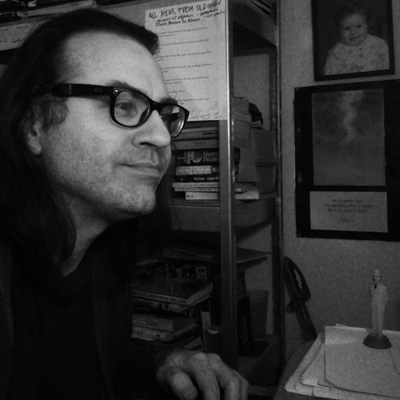
Dustin Monk has graced Shimmer‘s pages before with “What, Fireworks” in Issue #15. We welcome him back with a tale that is slightly more down to earth this time. Maybe…
#
Tell us how “The Street of the Green Elephant” came about.
“The Street of the Green Elephant” actually came about from another story I was working on in which a brother and sister flee from a city under siege. The story was told from the point of view of the brother, but I kept running into narrative walls writing it. One of the reasons for this, I think, is because Auw-da — the sister — kept stealing every scene. It became clear that she wanted to tell this story. So she did. Of course, the story became something different in Auw-da’s telling, but such is the nature of stories.
You traveled to Thailand last year; has this had an impact on your writing yet? If so, in what way?
You know, it’s probably a cliche to say I fell in love with Thailand, but I don’t care: I fell in love with Thailand. I don’t know that I consciously notice its impact in my writing – instead, I notice it in my daily life because I’m learning to read, write, and speak Thai – but going over some of the stories I’ve written in 2013, I can see its influence pretty clearly. A lot of my earlier stories were set in pseudo-European, American Midwest, or desert-like locales, but now many of them have changed to more tropical climes or are set specifically in Bangkok; I may or may not be working on a novel that shares similarities to current Thai politics; and I think reading Thai folktales is allowing me, bit by bit, to abandon any dependence I still have on traditional Western storytelling. I don’t know if it’s made a better writer, but it’s made a different one. That’s something, at least.
What’s the best book you’ve read lately?
There are four. And one more. From 2013, I really loved A Natural History of Dragons: A Memoir by Lady Trent by Mari Brennan, A Stranger in Olondria by Sofia Samatar, Americanah by Chimamanda Ngozi Adichie and, if it isn’t kissing too much editorial butt here, I’ve been having a blast with Rings of Anubis: Gold & Glass by E. Catherine Tobler. I will also always recommend everyone read The Golden Age by Michal Ajvaz, translated by Andrew Oakland.
What’s in your iTunes/Spotify/8-track lately?
This year I fell in love with Lorde, Beyonce, Savages, and listened the hell out of the new My Bloody Valentine.
What’s your favorite Ray Bradbury book/story?
It is impossible to answer this question! Instead, I will tell you my favorite opening sentence of any book ever and, as it so happens, it belongs to Mr. Bradbury: “It was a pleasure to burn.”
The awesome Annalee Newitz joins the Shimmer family with “Unclaimed,” a story that…well, I’ll let her tell you!
#
Tell us how “Unclaimed” came about.
It was during the Google Books hearing, when the company had digitized hundreds of thousands of books without any author permissions, and proposed to set up a “book rights registry” to hold any licensing fees obtained for digitized books that didn’t get claimed by their authors. I was writing a nonfiction article about it and started wondering, what the hell would happen if one of these unclaimed books actually started making a ton of money?
Anyway, Google was sued by the Author’s Guild, and it looks like their plans to make all these digitized books available online have been foiled. But I think this future is still very plausible. Well, except for the giant squid scorpion, who has the post-structuralist feminist power to destroy binaries with her mind.
You write both fiction and non-fiction; does one feed the other, or are they separate crafts?
Probably my previous answer makes it obvious that they definitely feed into each other. I love science, and both my nonfiction and fiction writing are ways that I try to think through how scientific discoveries will change the world, even in tiny, personal ways.
Talk to us some about i09; it’s such an awesome site, a delicious mashup of fiction and science and well, science fiction! How did it come into being?
I founded the site back in 2008, when Gawker Media invited me to cook up a site about the future. One of the first things I did was hire Charlie Jane Anders, and she and I worked together with our amazing team of writers to make io9 into the suicide soft drink of futuristic topics. I think the key ingredient is probably the bright purple soda.
What’s in your iTunes/Spotify/8-track lately?
The Kills and La Roux and — just for pure guilty pleasure value — Weezer.
What’s your favorite Ray Bradbury book/story?
The Martian Chronicles. It was one of the first science fiction books I ever read, and there are scenes in it that I still think about 25 years later.
#
Check Annalee out at io9, or the wikipedias! And grab your copy of Shimmer 18 here, with our special print/digital bundle!
Shimmer #18 has been great fun to assemble, because working with the talented Ann VanderMeer as our guest editor is not something a person gets to do every day.
Ann has chosen eight stories that span a wide range of speculative fiction and a diverse collection of authors. Included in the issue are Ben Peek, Rachel Marston, Ramsey Shehadah, Christine Schirr, Ben Godby, Annalee Newitz, and Dustin Monk. You also get a brand new short story from Jeff VanderMeer!
We are terribly excited to share this issue with you, and because of that we’re offering you a new deal: when you buy the print copy, you can add the digital copy for only $1 more. This is our Valentine to you, our dearest readers.
We are excited to tell you that Shimmer author Sam J. Miller will be taking part in the New York Review of Science Fiction Reading series, on January 7! Sam shares the bill with Jennifer Marie Brissett, and will be reading his upcoming Shimmer story, “Allosaurus Burgers.”
Reading will take place at the SoHo Gallery for Digital Art
138 Sullivan Street
Doors open at 6:30 PM
Program begins at 7:00 PM
Admission Free – $7 donation suggested
“Allosaurus Burgers” will appear in Shimmer this summer!
If you are nominating for Hugos, Nebulas, or Best in Badgers, Shimmer appreciates your consideration! Shimmer is eligible in the Semiprozine category and its editors in the Short Form category.
In 2013, we published #16 and #17, including the following short story works:
Ordinary Souls, K.M. Szpara
Goodbye Mildred, Charlie Bookout
Opposable Thumbs, Greg Leunig
Word and Flesh, Dennis Y. Ginoza
The Revelation of Morgan Stern, Christie Yant
The Binding of Memories, Cate Gardner
The Death and Life of Bob, William Jablonsky
The Sky Whale, Rebecca Emanuelsen
Tasting of the Sea, A.C. Wise
Lighting the Candles, Laura Hinkle
Gemini in the House of Mars, Nicole M. Taylor
The Haunted Jalopy Races, M. Bennardo
In Light of Recent Events I Have Reconsidered the Wisdom of Your Space Elevator, Helena Bell
The Mostly True Story of Assman & Foxy, by Katherine Sparrow
How Bunny Came to Be, by A.C. Wise
The Moon Bears, by Sarah Brooks
Sincerely, Your Psychic, by Helena Bell
Out They Come, by Alex Dally MacFarlane
Love in the Time of Vivisection, by Sunny Moraine
Fishing, by Lavie Tidhar
98 Ianthe, by Robert N. Lee
The Desire of All Things, by Jordan Taylor
The Metaphor of the Lakes, by Yarrow Paisley
Romeo and Meatbox, by Alex Wilson
Like Feather, Like Bone, by Kristi DeMeester
Girl, With Coin, by Damien Angelica Walters
River, Dreaming, by Silvia Moreno-Garcia
The Fairy Godmother, by Kim Neville
We Were Never Alone in Space, by Carmen Maria Machado
The Herdsman of the Dead, by Ada Hoffman
It’s “98 Ianthe” by Robert N. Lee that is your favorite read from Shimmer #17! (“The Metaphor of the Lakes” by Yarrow Paisley came in second, for them keeping track!)
If you haven’t read Robert’s story yet, here is your opportunity. Enjoy!
You used to be in the band; now you work on the asteroid. People you have to work with, they ask about it all the time when they find out. And they always find out—somebody always tells them. They all want to know what that’s like. “You used to be in the band? And now you work on the asteroid?”
They always think they’re the first ones to ask. You can tell because they always start with “You must get asked this a lot…” and nobody really ever means what they say—they always mean the opposite.
Want the complete issue? It includes fiction from: Sunny Moraine, A.C. Wise, Alex Dally MacFarlane, Alex Wilson, Damien Angelica Walters, Silvia Moreno Garcia, and more!
Our Girl Reporter, chin-deep in her egg cream, watching her suspectsvictims interview subjects. The longer she stays, the more fascinating they become.
The 666ties has some amazing playlists, but what are you listening to that isn’t tied to the work?
There’s a new Jackson and His Computer Band record, I found out recently. I’m kind of buried right now and mostly only listening to music related to the stories, to be honest, and not paying attention to a lot else. Julia always throws new stuff I haven’t heard at me, though.
JRS: “Jackson and His Computer Band”: You’re welcome!
RNL: Was that you? Of course it was. I suck.
JRS: That’s what makes this a great partnership; we really are on the same wavelength about how much Robert sucks. I listened to Tame Impala a lot while editing and copywriting 666ties. If you think the editor’s music selections don’t matter as much, you’re right. (I guess it kept me from inserting a bunch of hashtag-based humor though.)
RNL: Oh, come on — we agreed the stories would be SEOed up the butt. You’re just still mad because I changed all the verbs on the last story to “twerk” and all the adjectives to “whitepeopleproblems” at the last minute. Wait’ll you see the next story, it’s all about Xbox One launch issues and the Obamacare web site now.
JRS: #prefiguring #foreshadowing #sorrynotsorry
RNL: And now I’m going to go listen to this…Tame Impala? You speak of?
JRS: They’re like a cross between the Beatles and the Beatles and me killing myself. You’ll love them!
Apparently it wasn’t enough that the stories be awesome; let’s talk some about the art—how did you decide on a design? Was there a specific influence here?
No, there’s not a lot of planning to the covers beyond the incorporation of the constant footer element. And what planning is done tends to get thrown out. Of the ones done so far, “Live Lady” and “Finest Kind” look exactly how I imagined them, pretty much. The rest all developed as I worked on them — “She’s Not There” was going to have a ton of illustration on the cover, and it ended up being the simplest one, so far. With no illustration at all.
There are scattered influences that show in the covers. The “Califormication” cover refers pretty overtly to the old Scholastic Book Services magazine Dynamite! “Untitled Bruce Lee/Phil Dick Project”‘s cover may remind of certain eighties novels for…reasons. “She’s Not There” riffs on rainbow-geometric design of the period and the cover of Everything You Ever Wanted To Know About Sex. (Which is a seventies thing, but…I’m mashing stuff up, here.) I haven’t patterned the illustration after anybody, though, that’s…all mine, for better or worse.
Julia Rose Sevin
How did the editing process work? Did the work evolve at all in the editing stages? Yes, what I really want to do is expose the heart of the conflict that drives all amazing work: how many knife-fights there were over comma placement, em dashes, and ellipses?
We haven’t had any fights at all. For the most part, I follow every suggestion and correction Julia makes and occasionally I say “No, I like it better the way I had it,” but that’s almost never. I do embarrassing stuff in first drafts like eight characters talking in the same paragraph and using the same novel word three times in three pages, I abuse punctuation, etc. Julia’s a lot more experienced and educated than I am that way, I’m mostly self-taught.
JRS: Oh, I’m self-taught, too. I’m just smarter.
RNL: Yeah, that too. I always think of you as having way more schooling than I do, but that may just be the Laura Ingalls Wilder pioneer school marm demeanor you affect. BTW, I still need that gingham dress photo of you never missin’ a prairie sunset. You do have quite a bit of experience as an editor, though, and I have much less. Let me compliment you about one goddamn thing at least, woman.
JRS: No.
RNL: She also busts me when she thinks I’ve written beneath my abilities and gotten lazy — there’s a lot in the stories that wouldn’t have the punch it does, maybe, if Julia hadn’t caught me slacking.
JRS: Which is hardly ever, but very obvious when it happens. Editing this was a dreamily light gig compared to other work I’ve done, where the authors had A. less of a clue what they were going for, and B. less command of the language, word-by-word, to realize their will. Robert has a real vision in what he’s doing, and he’s worked hard as hell to make sure these stories do what he wants them to, in every word; he knows exactly what he wants to get across and the voice is almost unfailing. (I eliminated the failures.) That general consistency makes it really easy to identify weak spots, really. He slips in a flat or rote turn of phrase on a page packed with Lee Colorful Expressions™, ♪♫ One of these things is not like the others ♫♪, I redline it, he rewrites it, hey presto. I get to feel like a god and the story is what it was obviously supposed to be.
RNL: Everything I’ve ever had published and been happy with has been a collaboration, really, with an editor, or multiple editors. This is no exception, certainly.
JRS: I still think he should have added more butts. People love butts. I love butts. I love butts.
RNL: Get butts trending for a week or so next month, and the 1964 story will be all #datass, all the time.
The thing that surprised me most and sticks with me hardest, I didn’t end up using for any of the stories. I never intended to use it — I read a lot about the last few days of Martin Luther King’s life in Memphis, especially, but King was not going to be a character in “Finest Kind.” So most of that reading wasn’t direct story research, it was just…building the world in my head around the story, outside the story, I guess.
Anyway, I found this detail of history I’d never known before, and this sticks with me, for some reason: about an hour and a half before King was killed, he had a pillow fight in his motel room with the Rev. Ralph Abernathy and Andrew Young.
Speaking of cultural weight, I don’t remember a time in my life when I wasn’t aware of King’s life and work and assassination. There must have been a time, early on, but I don’t remember. It’s this massive thing, this pivotal thing, this horrific thing, this sacred thing, really. And this detail, these three friends all of a sudden breaking into a pillow fight, at once sort of freed me from all that weight of history and culture and story after story and made the events of that day real life events. These friends had a dinner to go to and they horsed around and then got straightened up to go out and then they went out and one guy was fumbling with his keys or whatever and one of them got murdered. It happens every day.
And then the weight of it came rushing back and the whole thing was even more tragic, even grander for the smallness of its parts, if that makes sense.
JRS: This is what I saw as a great opportunity for butts action. Blackballed by Mr. Funbuster here.
RNL: Things I Didn’t Make Up for 666ties: butts.
What the strangest thing was that you didn’t have to make up? Like you’re all “hey, I’ll put Manson in a rocket to the moon” and then whoa, you found out that happened.
I have had some weird things happen, like they do when you’re writing, where I made things up and then looked up real history to see how it synched up and…things were perfect, it was crazy. I can’t remember any offhand right now except one Evonne was present for — we’re writing the first/last 666ties story, “Santa Medusa Novela,” together. Anyway, we were brainstorming and coming up with character names, and the main character is a superhero with a 1960-style Hollywood star fake name. And we wanted it to have some kind of religious significance, maybe, but…related to the story in a unique manner that wasn’t religious.
I came up with Connie St. Claire, and then we went and looked up the actual Saint Claire/Clare, who…turned out to be the Patron Saint of Television. Which was pretty fucking perfect.
Oh: the Million Volt Light and Sound Rave. I had no idea that had happened or that Delia Derbyshire and Unit Delta Plus had performed until I got into researching and writing “The Live Lady of Down Town.” That…was kind of a spooky one, like THE UNIVERSE IS TELLING YOU TO WRITE THIS STORY, ROBERT. She seriously played at an all-electronic rave, and right when I had this story set already, in 1967.Wha?
Apparently I ask everyone this now, but what is your favorite Ray Bradbury story/novel?
I’m probably not a great person to ask, as I’ve read very little new this year, but…I did read one of the best new genre novels I’ve read in several years, and best novels period: Doug Lain’s Billy Moon. That book is amazing. And it’s about the sixties!
JRS: I don’t read. What a waste of time. Candy Crush is where it’s at, kids.
RNL: As usual, Julia gives herself too little credit. She’s like a walking encyclopedia of 1960s fanfic about butts, for starters.
JRS: Okay, that’s a compliment I’ll take. Could you endorse me for it on LinkedIn? I’ve been reading East of Eden for the first time. I grew up in Mendocino, in northern California, a very preserved and quiet old town set against dramatically gorgeous, stoically powerful nature — in fact, it’s the town where they shot the James Dean flick and he allegedly hung out in my house — so it’s been striking all the right chords to make me get all oogly. Definitely recommend this hot newcomer. Check him out if you can find him. Jim Steinberg, I think, really great stuff.
What’s next, if not the 777ties?
There will be a collection, coming after the series wraps up in February. We may do a print edition, we’ll see if there’s any call for that. We got a request this week — somebody wanted to buy a poster of one of the covers, “Live Lady of Down Town.” So now we’re selling posters of all the 666ties covers at the Awesomedome.com site.
In terms of what happens after March, I’m not even thinking beyond the next couple of months and getting these stories out, right now. Back to subbing stories to magazines and anthologies, I guess — I’ve only got three out now and writing new stuff for that pipeline is on hold for the moment, obviously. I have a few non-666ties stories in ready to write condition and occasionally nagging at me, though, and a handful more almost there. So I’ll be busy.
Enter: Our Girl Reporter, almost so hip she can’t see over her pelvis, looking like she’s been tossed out of a TARDIS in mid-flight.
Her targets: (1) Primo jive turkey Robert N. Lee, who appeared in Shimmer #17 and now stands accused of writing (and doing the cover art for!) a decked-out series of novellas set in the 666ties. (2) Paper shaker Julia Rose Sevin, who stands accused of editing the work out of its incomprehensible primordial slop. (Alas, it contained no dinosaurs. Or did it?!)
Will Our Plucky Girl Reporter survive or will she bug out and call in the heat? Spoilers, sweetie.
#
So, why the 60s? Why not the 20s or the 80s, or do more decade-delights await readers?
I was born in 1967, it’s always been a decade with a lot of cultural weight in my life, like it is for everybody else who came after. I mean: it’s THE SIXTIES.
There’s a lot of personal weight there for me, too: my father fought in Vietnam — we spent the first couple years of my life there. My dad became a communist and SDS member and labor organizer when he came back, then hippie tripped out to California, where my parents became Jesus People, like lots of hippies around the same time.
The scene in “Califormication,” where you first meet Manson, and he’s sitting on pillows, surrounded by women combing his hair, that’s based on a real thing. My father — we lived in the San Francisco bay area in the seventies, for some context — and his hippie church friends used to go out and argue with teams of guys from other religions on weekends. Like…freaking You Got Served, only mixed with the opening of Airplane!, where Robert Stack marches through the airport punching cultists begging for donations. Is how I imagine it, anyway. Like religious softball league or something. Sometimes in Santa Cruz, where we lived, or in San Francisco or Berkeley or wherever.
Anyway, so one time my dad and his friends got invited to debate the heads of the Love Family, this Children of God offshoot cult, at their compound or whatever in The City. And the head asshole was sitting there the whole time with these women around him, combing his hair, this total bizarre sexist power trip thing. So that’s where I got that. That’s a real thing.
JRS: I was going to make a snarky comment about how “PFFFFFFT, if Robert writes a collection about the eighties, he can find somebody else to edit that overexposed hogwash” or something, but the truth is I really thought the sixties were totally played out, so the theme had me hesitant about this series until I read it. His approach seems to be to ignore popular conceptions and appetites entirely. 666ties neither affirms nor deconstructs some well-established, narrow-scope sense of the sixties. Rather, he finds tidbits of the most interest to him (which are interesting because he is interesting), which have been the least fictionalized, and spins them out into something fresh and self-sovereign.
RNL: That’s…pretty cool. I mean the part about trying to throw out what The Sixties means, that is a big part of what I’ve tried to do in the stories, but I don’t think we ever had a conversation where I stated that, as such. So yay: I win all the writers.
My social media feeds have been exploding with Dr. Who chatter, being that this week sees the arrival of the 50th anniversary of the show. Talk to us about the genesis of this week’s story, “Live Lady of Down Town,” its influences, and exactly how awesome that DW theme music still is.
I got the idea for “Live Lady of Down Town” when I showed my girlfriend, Evonne, that photo of Delia Derbyshire, the most famous one. The hair band, bent over the tape deck. And this was after I’d told Evonne all about Derbyshire — I can’t remember how we got on the subject, except it wasn’t watching Doctor Who. We were talking about electronic music one night.
I showed her that photo and Evonne fell in love with it immediately, the way people do, she thought Delia Derbyshire just looked so cool. And the thing is: that photo didn’t look cool at all back then, probably, to most people anyway. It looked like a weird girl doing techie stuff–boy stuff. It takes decades of all kinds of things changing to get to Evonne’s excited first response: “She looks like a DJ!”
That all went through my mind and I pretty much had the whole idea for the story right then, in an instant. Actually getting it done and the structure of the thing and etc. took a while, but I knew I was going to write a story where the Doctor Who theme kicked off rave culture and wide popularity of electronic dance music way early, and Delia Derbyshire got all the credit and fame she missed out on in this life for her significant accomplishments, and then some.
The importance of that piece of music is immeasurable. It touches on a thousand different geekdoms, and it’s not like Derbyshire was the only pioneer in what would later become more automated and form the basis for a thousand different types of interconnected musics based in samples and loops and breaks. But: she’s a big one, and plus: she did the Doctor Who theme! Which isn’t the first electronic theme or scoring for any film or television, but it’s the first massively popular piece of electronic music that sounds like all the new wave and hip hop and industrial and disco and house and techno and etc. etc, etc, that would follow. You can actually dance to it–also a rarity among SF themes, certainly. The KLF proved that forever by mixing it with Gary Glitter, and giant crowds regularly dance to exactly that music at Orbital shows.
It wasn’t much of a leap from there to: Delia Derbyshire Becomes the World’s First Superstar DJ, Helen AmeriKKKa.
Anyway, we’re going to watch the Doctor Who 50th on Saturday, of course, but we’re both mostly excited about An Adventure In Space and Time, on Friday. Derbyshire’s a character in that BBC movie about the creation of the show, and I guess we’re more Delia fans than the Doctor’s, really. (And I started watching Doctor Who in the seventies, lest that be taken as a slight to the show — I loved the show as a kid, it’s been so surreal to see it come back and this time become so popular in the US. Crazy. That Gaiman episode about the TARDIS made me all misty eyed. There, I said it.)
Tell us how the 666ties came about? Was it always a collection of stories? Which story actually came first?
I thought of all these SF and fantasy and horror stories set at different points in the sixties, all around the same time. A couple of 666ties stories are older ideas I liked but never did anything with and they came together as I started thinking about a decade’s worth of stories. But mostly, I had a story lots of editors liked, and other writers who read it did, too, but it didn’t sell, “The Live Lady of Down Town.” And for whatever reason, writing that one, set in an alternate 1960s, made me start coming up with ideas for other 1960s stories that bubbled up to the top of the heap quickly, like some story ideas do.
That was a year or so ago, that I thought about doing this, first. I think I told Julia about it a few months later, and she was like “You should do that.” She’s been a booster since I told her about it, pretty much.
And Julia didn’t like that story at all the first time she read it.
JRS: I did not hate “Live Lady” on first read, I found it entrancing, but I’m embarrassed to say it was way over my lil’ Millennial-Gen head and I just. didn’t. get it. The parallel stories being told in opposite order, I don’t even remember it that way, I just remember it as being all mish-mashy timey-wimey wibbly-wobbly, and I didn’t know how much of it was totally made up and how much of it was just legit sixties but outside of my baby knowledge. When we went to assemble the collection last month and I did my editorial pass, I totally got it.*
*False. I still needed help from Robert to understand what kind of global historical differences he was implying, and what the real Derbyshire history was, because I’m not familiar with it like he is. I don’t feel like my ignorance significantly hobbled me as an editor, because something really stellar about Robert’s work in general, and about this story’s alternate history in particular: enjoying these stories isn’t an exercise in identifying precisely which battle details or trade agreements the author has introduced or changed, and smugly savoring the results unfold realistically in a very hard-sf-mentality kind of way. The non-historical content in 666ties is so incredibly imaginative and mindbending (in a way that makes the 60s just such an obvibrilliant fit) that the dry academic questions of “Where did the line blur history, and why?” is the last thing on your mind. You’re already breathing blue stuff in the deep end of a great story.
Let’s talk about the Potential for Controversy with these stories. We have talked some in email about having to write to your truth; you can’t worry about who’s going to read it or how they may interpret what you wrote. You have to write it as you see/hear it, and someone somewhere is going to Get It. But is there a balance to be kept? Was there a temptation to tone down potentially controversial subjects/language?
Wow, that’s not a can of worms or anything.
I guess of the stories out so far, “Finest Kind” is the obvious story to address here. I turned Ayn Rand into a rapist witch who’s got a beard marriage with Kenneth Anger in “Califormication” and “Live Lady of Down Town” is about teenage girls going out and doing drugs and having loads of fun doing so, but…”Finest Kind” is about black people. And it concerns black American issues, and Martin Luther King’s murder, and civil rights v. black power in the sixties, that clash. And it centers around racist humor and The N-Word. Plus: Elvis Presley is basically like those cops who killed Schwerner, Goodman, and Chaney, feet up in the courtroom, chewing Red Man and smirking. On steroids and crack and acid.
So: there’s a lot of opportunity for people to take offense at the story, for a wide range of reasons, some of which I might even sympathize with. I thought a lot about Is this even a story I should write? Evonne was like “Whaaa?” when I first told her the initial idea, which…involved Captain Whizbang and his power word, from the get go. She warmed up to it when I built on the idea anyway, and then told her the story in much greater detail when I had it. I told a few people about it, and when it was written I sent it to people I know who read my stuff for me sometimes, first readers. I haven’t gotten any feedback from anybody about it being offensive to them, far from it, actually.
I don’t rate people being offended very highly on my list of things to worry about, though. I started out writing horror stories, and that’s my first love, genre-wise, and…horror is all about offense, from the gentlest ghost story to something like A Serbian Film or Hostel. There is no horror story you can write that doesn’t offend someone — they’re all about the plain fact that we’re going to die, at heart, putting that front and center instead of wherever you tuck it to get through your days. Indeed, there are whole religious bodies who will forbid their faithful reading your stories, if you write horror stories, and children will likely have them taken away at even the most liberal grade schools.
I suppose, outside horror, there are many stories you can write that can’t possibly offend anyone. But who’d want to?
#
Who would want to, indeed. Hepcats, join your intrepid Girl Reporter back here on Friday, where we talk more 666ties, and totally don’t go off the rails…nope, not us, no way.
Want to hear some sounds of the 666ties? Check it:
Which one was it? There are seventeen delights to pick from in this issue.
Take our Reader’s Choice Survey, and let us know your favorite. Once the results are in, we’ll talk to the winner about putting their story up online for the whole world to enjoy.
And you could win a free copy of Shimmer, just by completing the survey.
Casual Debris says: Shimmer Seventeen features a little sci-fi, some nice ghosts, as well as more than one second-person narration, several unsympathetic mothers and three Canadians, all tossed to the far-end of the collection. My favourites are those by Alex Dally MacFarlane, Yarrow Paisley and Kim Neville.

 Monk has graced Shimmer‘s pages before with “What, Fireworks” in Issue #15. We welcome him back with a tale that is slightly more down to earth this time. Maybe…