Facts are Friends: Writing What You Know

Write what you know…they all say it! Author Cassie Alexander stops by to tell us why writing what you know can be so awesome and can take your writing to the next level.

#

For me, the best stories are firing on three pistons – they’re good, interesting, and true.

Goodness is a matter of storytelling skill. It has everything to do with pacing, voice, the rise and fall of action, and emotional resonance. Interestingness is all about novelty – new people, new places, new emotions. And truth is about being honest with your reader, and yourself.

The ability to tell a “good” story (for my limited criteria above) is acquired through time and patient practice, and is a longer, vastly different post. Same thing for emotional truth. But interestingness is something you can seek out and find. And what better place to do that than in your job or passionate hobby?

I never intended to write books about being a nurse while actually being a nurse. I went into nursing as a career to have a part time job I could afford to live on, while having enough free time to write. I assumed I’d be nursing at night, and writing science fiction during the day, and for a while that’s what I did.

Friends encouraged me to use the frankly absurd work stories I accrued in fiction, and for a year or two I said I couldn’t. Things were too weird, no one would believe me, and I didn’t know enough about nursing yet to write with any authority – I felt too new. All that ended the night I called a doctor to ask for more sedation on a patient who was crawling out of bed. The doctor clearly didn’t believe me, and left me hanging – I practically had to sit on this patient to stop him from extubating himself all night. I got off the phone too angry to breathe, and my first thought was, “That’s it. You’re going in a book.”

After that, I started writing Nightshifted – and that scene is pretty much the introduction to my book.

Now, Nightshifted isn’t completely truthful, in that it’s completely factually accurate in every way. I mean there are vampires in it for crying out loud. And honesty and the urge to not get sued compel me to note that there’s no one event or patient in Nightshifted that comes from any of my working life, etc. etc. etc. (Which you’d think would be evident from vampires, but you never know.)

However, being a nurse gave me the opportunity to sprinkle Nightshifted with moments that were interesting, loosely based on experiences I had, and with emotions that were true. And anything that you’re passionate about can provide you with those opportunities too.

You don’t have to have a job in your field, you can be an enthusiastic hobbyist or dedicated researcher. It just needs to be something that you’re into. If you’re writing something historical and researching it is a drag…why are you writing it? Ditch that project and find one you’re really interested about.

Everyone knows something interesting about something. Work with yourself until you find it – or with other people until you find theirs. (This is how I have survived many long trips with chatty people on planes.) And even if you look at your life and think it’s plain – consider how you would be under vastly different circumstances. You could be an accountant…dealing with ledgers on a colony ship. Or a teacher with a classroom full of aliens. Or a nurse – working on a floor with vampire exposed humans. You get the picture.

Every authentic experience you have as someone In the Know – be it in health care, law, cooking, parenting, teaching, quilting, bronco-busting, you name it, is an experience that you have had that other people might not have had before, that readers will want to share through you. There’s also probably a themed romance or mystery series in there for you to publish in, too.

The key to using that knowledge – to make readers excited to go on your same ride — is to filter it appropriately.

Have you ever read a text book? Or read somebody’s draft that read like a text book? There’s a temptation as an expert to overshare – after all, you really know what’s happening in a courtroom! Only…as most of us know from jury duty, the vast majority of that stuff is deadly dull. Same thing for the hospital. I get so excited to write accurate scenes sometimes. I’ll think, “And here is the one book in all of fictiondom that will teach everyone how to start an IV!” (Note to self: if you have ever sat and honestly wondered, “Why has no one ever written this before!?” think very, very hard. There is probably a reason.) Cue angels singing above at the genius of my completely new scene. I write it, content – because being overly accurate feels really good. Word count racks up. You don’t have to wonder what’s coming next, you know, because you’re dryly describing it, like an Ikea instruction manual. And then you reach the end of the page, and realize all your facts have done nothing for your plot and you have to delete it all.

Unless my imaginary patient has iron skin which makes an IV start impossible and which’ll be a plot point later, there’s no point to having it in there. Iron skin = bullet proof? IV = way for poison to get in? If it doesn’t come up again, it needs to go.

Another good way to pull facts and minutiae in, is to use them in relation to a character’s emotional state. What if, instead of my character dryly describing wiping skin with alcohol, she’s trying to start an IV on a crying child and her own baby just got kidnapped by werellamas? That’s a great moment for your character to have some personal revelation about the nature of protecting children, or a mental infodump about “If only my own child were here crying, and I could comfort them like this mother, I wouldn’t have to worry about who is looking after her on this, a full moon night.” Then we’re advancing the plot via characterization, and explaining the factual activity, which is a nice way to block a scene. (Oh, for the good old days when everyone could endlessly smoke, and thus always be doing that with their hands!)

I used to be scared about writing things that could (were vampires real) happen. I felt like I’d be trapped. But over time I realized there’s a beauty in the constraint of facts, and I find that research used really helps my stories grow. Instead of having a vast open plane (actually and metaphorically) my characters could travel through, where anything could happen at any time, and who knew what would happen next, facts gave me a fence line to follow. I know characters can realistically only cover so much distance in a day, or fight with certain weapons due to the time period, or have certain pop culture references. It’s much easier once you’re set into a certain time and place to know how things will have to flow – after running for 20 hours, my protag will have to hide out and sleep, where at, oh, that park that I know is there in my fictional town – where the werellamas roam! Plot spools out from plausibility which comes from personal knowledge.

I was also worried about being found out as a fraud. You do want your writing to be as plausible as it can be – you don’t want your cowboy to tame the dragon he’s bronco-busting overnight, if it’s actually a three day saga in real life. (Real-ish life.) Or, your character to be resuscitated sheerly by CPR when the actual chances of that happening are abysmally low.

But there’s also no use in worrying about pedants, if people using CPR like magic on TV have shown us anything. Most people won’t know when you lie, if lie carefully. Only you can tell if you’re working as hard as you can to make your story work within the constraints of personal knowledge. If you are, don’t let your facts hem you completely in. Sometimes you have to bend facts to fit the story. It is completely okay. And hey, if you’re in outer space or using genre tropes, oftentimes you can consciously handwave out of it anyhow. If you’re telling your story right, people might notice but enough other things will be going right not to care. They’ll be so consumed by the fact that your protagonist has almost found her daughter at the werellama ranch that they’ll flip to the next page anyhow, and your well told story is more important than any single fact.

If you are the boss of your research, and you can keep plot foremost in mind, then beach-comb as many truths to use from your own job/hobby/research-addiction as you can, and you’ll be golden.

#

Cassie Alexander is an author and a registered nurse. Her debut novel Nightshifted is out now through St. Martin’s Press.

Shimmer Goes Weightless

Considering all the cake I eat, it’s silly…being weightless…but of course I mean Weightless Books!

Shimmer 14 cover
Shimmer Issue 14

We are super stoked to announce that Shimmer is now available at Weightless Books. Our current issue, #14, is there, but all future issues will be there as well, and, of course, back issues!

For all your electronic Shimmery needs, you can easily access our page here, which includes cover art and sneak peeks at each and every story.

Back issues will be added in PDF-only, but future issues will be released in PDF, mobi, and epub, and of course they will be DRM-free.

Shimmer on, people. Shimmer on!

Shimmer #15

We are anticipating a spring release for Shimmer #15 and I wanted to give you a sneak peek of what’s coming!

“The Undertaker’s Son,” by Nicole Taylor takes us into the life of young Albert, a boy who has strange talents when it comes to the dead.

“What, Fireworks,” by Dustin Monk explores a curious town which may be anchored in our reality or another. This story calls to mind Nick Bantock’s Griffin and Sabine, because you’re not quite sure exactly where the ground is from moment to moment.

Ever had your email hacked? “Signal Jamming” by Oliver Buckram shows us a future where an escaped convict wreaks the worst possible havoc imaginable, via email.

Megan Arkenburg’s “Harrowing Emily” takes us on another journey with the dead, only her heroines are seemingly less skilled than young Albert.

K.M. Ferebee returns to Shimmer‘s pages with “The Bird Country,” a story that has haunted me since I first read it a couple years ago. I’m quite pleased to have it in this issue.

“A Cellar of Terrible Things” is opened by Mari Ness, and what happened there will haunt you.

Milo James Fowler brings us “Soulless in His Sight,” a story that evokes memories of The Road. We are exposed to a raw post-apocalyptic world where one truly needs a soul to survive.

As with every issue, we’ll have special online content relating to these stories, too, including interviews with the authors, giving you insight into their process for writing the stories.

With Shimmer #16, we’re expanding. More stories! More authors! More art! If you enjoy what Shimmer brings you, why not subscribe before the price goes up? Four issues, delivered hard copy or electronic. Your choice! We have wonderful things in store. Come with us!

Honored

Ellen Datlow has once again put together a list (starting here) of honorable mentions to accompany the stories in her Best Horror of the Year 4 collection. Shimmer is honored to have four stories on that list.

Congratulations to K.M. Ferebee (“Bullet Oracle Instinct”), L.L. Hannett (“Gutted”), E.C. Myers (“All the Lonely People”), and J.J. Irwin (“Haniver”).

You can find all four in Shimmer #13.

Thank you, Ellen!

On Voice, On Gravy

David Erik Nelson joins us this week to talk about his new cookbook, Punk’d Squid, in which there are many recipes for sauce, secret and otherwise. Fear not, Dear Reader: you can make them all with two hands and/or ten fingers…

#

I want to talk about voice–about your capital-V Voice as a writer, and the little voice of each specific piece you write–but first I want to tell you about how this guy I know makes steaks.

He goes to the butcher and buys a few good cuts of beef.  Back home, while these steaks drain on the cutting board, he makes his “sauce.”  This sauce consists of Worcestershire sauce, malt vinegar, salt, pepper, brown sugar, ketchup, maybe barbecue sauce, whiskey (or whatever he finds in the cupboard), beer (maybe), wine (why not?), soy sauce, and season salt.  He marinates the steaks in this sauce for an indeterminate period, then sears them briefly on a high-BTU gas grill.

If you’ve spent any quality time in the kitchen, then you see how absurd this “sauce” is:  It’s five-plus kinds of salt, four kinds of sugar, four kinds of vinegar, the beer is mostly water . . . it’s a crazy hash.  The result is okay, I guess–it’s hard to go wrong with salt, sugar, and vinegar (which is why it’s in basically every bottle in your refrigerator door)–but it doesn’t particularly taste like a cut of fresh venison, or like grass-fed Delmonico, or like freezer-burned chuck roast.  It doesn’t particularly taste like anything.  That meat might as well be pressed tofu or a slice of Quorn (both of which, incidentally, I like just as much as I like a quality steak; I’m an equal-opportunity consumer).

I bring this up because I used to make steak the same way–because everyone is inclined to throw “just one” dash, sprinkle, and dollop into every recipe to give what we imagine is a distinctive little flourish that screams “This is ME!”  And we don’t confine this impulse to the kitchen.

Listen: Voice isn’t gravy.

It’s not something you pour over a story once the meat and veggies–the plot, the characters, the setting–are cooked and ready to plate.  Steampunk isn’t alt-history slopped with a ladle of cogs and dirigibles; literary fiction isn’t YA with the last half of the final chapter cut off and a schmeer of 50-cent words.

The voice of a piece–and your Voice as a writer–arises from stripping everything else out, not piling more crap on.

Right on the face of it, I’m sure this sounds absolutely absurd. On the one hand, all I’m basically giving you is Strunk and White’s nearly century-old chestnut to “omit needless words” (Rule #13).  On the other, the guy saying this–to whatever degree he might be at all notable–isn’t noted for sparing the verbiage.

Nonetheless, that’s what I’m saying:  My voice, which you no doubt hear in your head as you read these words, isn’t the result of all the words I’ve crammed on to this page; it’s the result of all the words I’ve left off of pages over the last 20-odd years (up to and including this one).

Take, for example, Poor Mojo’s venerable Giant Squid.  For about a decade I co-wrote Giant Squid advice columns on a weekly basis, usually a few thousand words, occasionally a dozen-thousand words or more.  Over the course of those ten odd years we wrote upwards of a million words of Squid.  (To this day it shocks me to say that; there are several complete and unpublished novels tucked in there.  There are so many pieces of Squid that I come across columns I totally forgot we wrote, and get LOLed by them all over again.  I’m like an Alzheimer’s patient, hiding my own Easter Eggs.)

In part, this project began as an exercise in puking all over the Strunkian edicts we’d been schooled in.  It was the ’90s, and we’d been trained to be “lean” literary writers, bare-knuckles chaps like Carver and Hemingway.  “Feeding the Squid” was our attempt to exorcise ourselves of the lush, verbose, oratorial 19th Century voices that still rung in our heads from our public-library boyhoods.  We were trying to write the Twain and Lovecraft out of our bones.

This exercise immediately sets you on the horns of the Voice Dilemma: In order to work, a piece needs to be long enough to carry the data readers want (i.e., the story, the info, the facts, the Truth, the fire).  But each word is cumbersome to read; it adds drag and saps the reader’s momentum.  So, every word has to add value slightly in excesses of the energy it demands. (If you had a single-sex education and are male, your English teacher might have introduced this to you as the “Skirt Rule”; with apologies: “All writing should be long enough to cover what matters and short enough to be interesting.”)

There is no room for superfluous words.  Nonetheless, even journeymen writers have a tendency to cook up a perfectly edible lil tale, and then finish it by slathering on the voice gravy–or, at the very least, to think of their “Voice” as being encoded in some little non-essential flourish they “permit” themselves, rather than in the undecorated main course they’re being paid to proffer.

The result is a goopy, unpalatable mess.  It can be “interesting,” but take a second to think about all of the things folk say were “interesting” rather than “good.”

FYI, this tendency–to make the meal then slop it in voice gravy–doesn’t just go for squidified Deadwoodian said-bookism.  We tend to treat any voice this way, even the leanest gumshoe banter: we write our story, and then cram in “dolls” and “molls” and “heaters” and “mickeys.”

Your Voice, even an overblown Giant Squid of a voice, is the result of reduction: You write from the start with too many words; too many tangents; too many footnotes; and three modifiers for every miserable, skinflint, parsimonious noun.

Then, once your fat, rosy-cheeked baby is finally born, cooing in her hospital blanket, you put her on the table, flay her, and into the stockpot she goes.

I cut my teeth on Stephen King and David Foster Wallace.  As I’ve gotten older, what’s really struck me about the two–who aren’t generally grouped together–is how much they fundamentally have in common as writers:  1. They both bring remarkable clarity to remarkably complex situations (in the case of King it’s his ornately multi-threaded novels, and for DFW it’s in his treatment of the intricacies of popular culture and mathematics; I don’t feel like DFW’s fiction is a paragon of clarity by anyone’s measure).  2. They do this in a voice that is at once casual and precise.  I know that sounds nuts: Both are guys that regularly top the 1000-page mark without batting an eye or apologizing.  But look at those pages, those sentences, and you see that their voices arises not from decorating workmanlike prose, but in shaving down a mound of logorrhea to the vital words that make the sentences go.  They don’t write long because they are slathering on a bunch of frosting and garnishing their books with radish rosettes and spiral-cut beets; they write long because they’ve got lots to say, and a lot worth saying.

And they both have voices that are casual and breezy and distinctly theirs.  You know you’re in a King story in seven words, even when it’s under the name “Bachman.”  You know you’re in a DFW essay–or a parody there-of–before you make it to the first footnote.

Listen: I take it back–Voice is gravy:

Voice is the economical result of not throwing anything away, but instead boiling and scrapping until what you have left is as concentrated as possible, a half-once of liquid with more flavor than the chops you started with.  Every good story will make its own gravy.

And your Voice emerges from the process of cooking up story after story after story in the same iron skillet, until that skillet is so seasoned that you don’t need oil to fry an egg, and any steak seared on it comes off tasting like it put you back $50 at a necktie establishment, even though you didn’t even bother to sprinkle salt on the pan prior to sizzling.

#

 David Erik Nelson’s fiction has appeared in Asimov‘s and Shimmer, and in anthologies like The Best of Lady Churchill’s Rosebud Wristlet and Steampunk II: Steampunk Reloaded. His celebrated steampunk novella Tucker Teaches the Clockies to Copulate is now available for Kindle through Amazon (and other formats at davideriknelson.com).  He co-created Poor Mojo’s Giant Squid with Morgan Johnson and Fritz Swanson, and regrets nothing.  Look for the Giant Squid in the upcoming anthology Steampunk III: Steampunk Revolution.

Squid illustration by PLuNDeRPuss!

Shimmer Triples Pay Rate

We’ve always believed the fiction we publish at Shimmer can stand with the best. And we’ve always thought it was worth a lot more than we were able to pay for it. Today, we’re taking a big step toward paying our authors what we think their stories are worth.

I am delighted to announce that we’re raising our pay rate for fiction from 1 cent a word to 3 cents a word, beginning with Issue 16. (Authors already under contract for Issue 16 will be recontracted at the higher rate. I’m sure they won’t mind.)

From here, it’s just one short step to pro rates. This is the golden age of the independent press, and we will thrive.

When Shimmer started, the goal was to raise the pay rate as the magazine could afford it. It has inched up over the years. I am so excited to see their pay rate rise like this. It’s a beautiful magazine, and this is a great step for authors. In a time when so many magazines are closing their doors, it’s nice to see one that is making changes for the better.

–Mary Robinette Kowal, Hugo-award winning author of Shades of Milk and Honey and Glamour in Glass

We’re also increasing the size of each issue by about 50%, so there’ll be even more Shimmery goodness for our readers. (Why not subscribe right now, before the price goes up?)

Other ambitious plans for this year: the Best of Shimmer anthology we’ve been dreaming about for years, in a fancy-pants hardback; a special young adult issue with a guest editor; and a foray into novellas and novelettes.

Shimmer has always been a labor of love, and it is marvelous to watch the beloved flourish.

Shimmer had the infinite good taste to publish one of my first short stories, and since then they’ve gone from strength to strength, establishing themselves as the purveyor of unique, quirky but always wonderful short fiction. I’m glad to see them take this important step forward.

— Aliette de Bodard, Hugo and Nebula-nominated author of the Obsidian and Blood series

My deep thanks to the Shimmery staff for their untiring efforts — and to all of our readers, whose support makes this possible.


By Any Other Name

I distinctly remember a set of submission guidelines from Marion Zimmer Bradley’s Fantasy magazine which said she wasn’t fond of pseudonyms (though had at least five herself). She said that one should shame the devil and tell the truth! Yet, it’s not always so easy, writing under one’s own name. Alice Sheldon certainly didn’t write under her own name. Is it different for men than it is women? Are there still reasons a woman might want to hide her gender when writing in the twenty-first century? Is there a need to hide one’s gender?

Christie Yant and Damien W. Grintalis inspired this post by a brief exchange on Twitter, in which they talked about pseudonyms. Christie said that when she was in junior high, she thought she would write under the name Chris so that no one would know she was female. I can actually understand that idea–it didn’t surprise me in the least bit.http://kiloword-design.deviantart.com/

When I first started writing, I went with E.C. Tobler, hoping that no one would know I was a girl. I wrote about sword fights and adventures on Mars and in Camelot; I wrote about strange voodoo dolls that came to life and ate people, and spooky graveyards filled with panthers who turned into sexy women, and I was surely just as awesome as all those men in the magazines I read (F&SF, Weird Tales, Asimov’s). So long as no one knew.

Why couldn’t they know? It’s strange and I don’t entirely know where it came from, but I remember having the distinct impression that I would not be welcome as myself.

When it came to settling on a name though, I went with E. Catherine Tobler, deciding that no editor would spell my first name properly, that no one would ever pronounce it well, either. The E stands for Elise, which is my name and what you should absolutely call me. In person though, I’m regularly called Elsie, Eliza, and even Eloise, by people who are too careless or hurried to take the time to actually put the letters in their proper order. In the end, that’s the only reason I modified my name for writing. Of course now, everyone who doesn’t know me calls me Catherine. That’s not so terrible…and does nothing to disguise my gender–and I’m perfectly okay with that.

I bugged Christie and Damien to talk a little more about this and they were gracious in doing so.

#

 Damien W. Grintalis:

Did you ever consider writing under a pseudonym?

I thought about using either D. W. Grintalis or D. Walters Grintalis as a way to prevent any gender assumptions, but I decided against it. Maybe it’s silly and vain, but I like seeing my name attached to my work. I never considered using a completely different name.

Does an author’s name cause you presume something about the story/book before you’ve read? Do you think there’s a difference as to how readers approach that and how writers approach it?

If I go to the bookstore as a reader, unless I’m looking for a specific book by a specific author, I’ll wander around until something catches my eye. I’m drawn to titles and cover art first. Then I flip the book open and read the first page or two. If it grabs me, I buy it. I’ve purchased many books without even paying attention to the author’s name, which, as an author, seems terrible to say, but as a reader, I’m buying the story, not the writer. Their name/gender/race/ethnicity doesn’t matter.

From a writer’s perspective, though, my purchase method is very different. I buy a lot of books on recommendations from other writers, or I buy books written by authors I’ve come to know via Twitter and Facebook and such, so I already know something about them as a person. And yes, this is contrary to the method I use when I’m in ‘reader mode’. When I buy as a writer, I’m buying a specific author’s story, not just a story that catches my eye.

If it’s a first person story, do you presume the narrator shares the author’s gender?

No.

Do any of your favorite authors write under a pseudonym?

No. (At least I don’t think so.)

You’re in a curious position of being a female horror writer who has a male name. Has that caused you problems along the way? Amusements?

The biggest problem is also an amusement or perhaps it’s vice versa. Until I started putting a Ms. in front of my name in correspondence, I would be addressed as Mr. Grintalis. It was amusing the first few times, then I found myself getting irritated. I stopped to think about it and really, why wouldn’t someone assume I was a man? At that point I had two choices – stop getting irritated and simply deal with the gender assumption, or add Ms. and acknowledge my gender. I chose to add the Ms.. Why should I hide that I’m a woman? If someone chooses not to read my work based on my gender, so be it. I have no control over that.

But I think my name suits the horror genre well. I imagine if I wrote romance or some other genre that has a predominantly female audience, I might be inclined to soften my name a bit so there would be absolutely no gender confusion. Case in point: I was a professional belly dancer for many years and I used the name Damiena. I wanted to use my real name, but I knew incorrect assumptions would be made if I did, so I added the A at the end to feminize it.

#

Christie Yant

Did you ever consider writing under a pseudonym?

When I was very young I assumed that only male authors were taken seriously and that I would need to hide my gender, so I had planned to write as Chris. I think I even considered taking a different last name, too (I was toying with Constantine at one time, if I recall) for weird personal reasons.

The gender thing is weird, though, because my favorite authors at the time were all women: Madeleine L’Engle, Meredith Ann Pierce, Lois Duncan. But I think I somehow thought they had always been Literary Giants, and were therefore somehow exempt from the limitations of what I perceived to be very much a man’s world.

Does an author’s name cause you presume something about the story/book before you’ve read?

As Robyn (@sheikyurbouti) pointed out, we all have these biases whether we want them or not, even if we become aware of them. So yes, even if I don’t realize it at the time. For example, I am more likely to assume a book is fantasy instead of SF if it’s written by a woman. I am likely to assume there’s a female protagonist.

Do you think there’s a difference as to how readers approach that and how writers approach it?

I think writers are probably more aware of the bias than non-writers are, because it’s our own careers at stake.

If it’s a first person story, do you presume the narrator shares the author’s gender?

Again, my instinctive biased brain says “yes.” Taking a step back, though, and giving it even a moment’s thought, I know it’s not true. I write both male and female protagonists, so why wouldn’t I assume than any other author does the same? But knowing that doesn’t prevent that first moment of seeing, say, “Claire” on the cover and my assuming on some level that between the covers there will be a woman protagonist. This assumption goes against experience and actual fact, but it’s still there.

The flip side of that is if I see initials on the cover, and the protagonist is female, I will probably decide the author’s gender by how the character is written, what happens to her, and how she handles it. THERE IS NO LOGICAL REASON FOR ME TO DO THIS. I keep emphasizing the fact that this is an unconscious thing because it’s a) embarrassing, b) most people don’t even acknowledge that such unconscious bias exists, and certainly not in THEMSELVES, and c) it is not representative of a person’s actual experience or ideals.

Do any of your favorite authors write under a pseudonym?

Yes, one does. Female, using a female name. I don’t know her reasons for doing so.

You mentioned that in junior high, you thought you would write under “Chris.” When did that idea change for you?

I think I still had that idea in my early 20’s, but by the time I got serious about it (at 30) I knew I wanted to write under my own name.

On a related note, there was a point of contention when I told my then-husband that I wanted to write under my maiden name–he didn’t like that, and I actually gave in at the time. I never was published under that name, though, and by the time I finally sold something we had divorced and I had taken back my maiden name.

A female author with many years of success behind her warns the women she teaches on this very point: She has been publishing under an ex-husband’s last name her entire career because that was her name when she first emerged.

 #

Reader, how about you? Hit us up in the comments. Do you write under a pseudonym?

Image by: http://kiloword-design.deviantart.com/

Responding to Reviews

Watch, I’m psychic. You think I’m going to tell you not to be the author who declares war on her best publicity tool:

Or not to engage in this passive-aggressive version:

…And you’re right. I don’t want you to do those things. But honestly, you’re reading the Shimmer blog, which means you’re smart enough that you probably don’t need me to remind you those are bad ideas.

So “don’t freak out at bad reviews” is only part of what I want to tell you. There are other ways to respond to reviews that might negatively impact your career, and I’m going to illustrate them with more cheesy cartoons.

Sometimes authors think that appearing reasonable is a good idea. Perhaps he’d like to seem like the kind of guy who uses criticism to improve himself. It’s not a good idea to comment even in agreement with criticism, however…


Readers who are normally too lazy to send you a whiny e-mail will be only too happy to complain to you now–after all, you’re right there in front of them, and since you listened to the reviewer, maybe you’ll listen to everybody! And now you HAVE to answer EVERY question, or it will look like you’re picking favorites, or like you’re sulking, or like you decided you were too good to come back and read the replies… You can’t win.

The best way to respond to a negative review is to get a photo of the reviewer from Google Images, print it out at work so you’re not even paying for the paper, and then use it for toilet paper after All-You-Can-Eat Shrimp Night at the Mexican seafood restaurant down by the docks.

(No, I’m not going to illustrate that one. Use your imagination.)

What if you get a positive review, one like this?


You might be tempted to thank the reviewer in a comment, or perhaps privately, through e-mail.

…Let’s not.

Every day, the Google Alert spell of “Summon Author” is cast all across the Internet. Authors see their name in someone’s blog, then pop up and say something before disappearing–or are they only invisible?

Imagine for a moment what it’s like to be a fan who gets a blog visit from their favorite author. (Hi, Scott Lynch!) Awesome, right? Now imagine what it’s like for a police detective to get a friendly phone call from the mafia (Hi, Joey the Fist). Okay, okay, it’s not that bad, but responding to a review isn’t good, either. The reviewer’s job is to monitor fiction and determine its quality, then pass that information on to readers. Authors are not part of this equation, and there are a couple of good reasons for that.

One is that if you are friendly to a reviewer, you’re initiating a personal connection, and now it’s in their professional best interest to stop reviewing your work, or at least to add a caveat about their bias. After all, once you’re a friendly acquaintance or a real friend, they’re no longer impartial. (This doesn’t mean you should avoid them like space herpes, but remember: reviewer friends doesn’t mean friendly reviews–it means LESS reviews.)

The second reason will make the most sense if you put yourself in the reviewer’s place. Reviewers are people, and while they know that you’ll see their reviews (or at least that you might), they should have the freedom to evaluate your work and comment on it without being afraid of possible retaliation. If you’re friendly once, it doesn’t mean you will be next time. And now they know you’re watching them and that you’re willing to insert yourself into a conversation where you weren’t invited.

Do you really want to be an unwelcome guest?


If you want to show off a good review, do so! There’s nothing wrong with pointing more readers toward the review–the readers belong in that conversation.

If you’re brave (hi, Jay Lake!) you can even link to your bad reviews. As long as you’re not trying to stir your fans into a ferocious horde, you’re still doing the same thing as when you linked to the good reviews: sending readers to reviewers.


Most authors would rather the readers didn’t find the bad reviews, but there are benefits. Sharing all reviews means more web traffic with your name as a key word. It makes you look humble and magnanimous. And it means that a reviewer who gives your work one star this time might like your attitude enough to try another of your stories, even though they found the first one an abysmal disappointment.

And maybe that second book will be the wombat phone book that wins their heart.

For the Birds

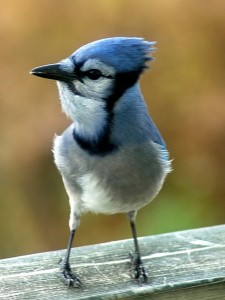
Blue jay, by Lucie G

Every morning, my porch is a flurry of wings and tails. Birds and squirrels and it’s a mad dash to the peanuts and the bird bath, especially the latter now that the temperatures are warming up and the water is no longer iced over. This morning, there has been an especially vocal blue jay, a bird I haven’t seen in months and months, ever since my neighbor (the Blue Jay Whisperer) moved. But here’s one now and he’s singing his little heart out.

At least until the crows show up. He goes quiet then, and the crow song dominates. Another crow arrives. A hearty crow conversation is had at loud levels.

“You didn’t tell me Jay would be here…”

“I didn’t kn–”

“At least we’re not wearing the same thing.”

The blue jay watches from a high branch, pondering, but he doesn’t leave. He sits the crows out and when they’ve taken their peanuts and gone, he sings again, then swoops down for a peanut of his own.

One of my favorite writing books is Bird by Bird, by Anne Lamott. It’s a book I come back to, especially when my creativity ebbs. It’s a way of refilling the well, of taking stock of what I do well, and applying that to the page. What did this blue jay teach me about writing this morning?

1. We aren’t all crows. Crows are big and loud and they pretty much go where they want to. The blue jay is smaller, but brighter. The crows are glossy, but the blue jay looks like he’s been painted with some care, whereas the crows were simply dipped. Both birds are pretty in their own way–different, distinct.

2. Your time will come. The blue jay comes in to grab his peanut but then bam, the crows return, startling him back up into the branches. He sits, watching and waiting, and when they go, it’s his turn again, to swoop down and be noticed.

3. You can get feedback from unexpected sources. The blue jay and the squirrels seem to have an accord. The jay perches on the fence with them sometimes and they watch each other as they take peanuts. The squirrels chitter. The blue jay sings. They seem to listen to each other, even though at first glance they have nothing at all in common but for their love of peanuts. Maybe that’s enough.

4. Write, even if you don’t think anyone is reading you. I can’t see the blue jay now, but every so often, I hear him. Even unseen, his song is heard and appreciated, probably by more than just me. And there he goes again. Singing. Singing.

You Do Not Write in Vain

Either I am writing or reading slush, at least that’s what I like to tell myself. In reality, I spend more time thinking about writing, more time thinking over the dozens of rejections I have received. Days, sometimes weeks are lost to a frozen paralysis where I wonder what the point is. It is difficult to write, and once you have written still more difficult to get published.

If I am lucky the rejections are like this:

We like your writing but…

If I am not, they are just rejections. Either way I am left to wonder what I am doing and why I do it.

In this mood I read slush. I read carefully, because I believe in the sanctity of the written word, the honor of carving out the time to sit down and write in the face of jobs, homework, dirty dishes, and a dozen other duties.

There are days when I rage because it’s clear the writer just flung words at the page—copious spelling errors, stories with ill-thought out plots, stories that are the wrong genre. Mostly, the stories are clean, well scrubbed in the way of children who are brought up with great care. In each of them there is something to love and something to fight for.

But the statistics simply aren’t in the writer’s favor.  Out of the 150 or so stories I’ve read for Shimmer, I’ve recommended twenty or so to the board. Of those twenty, three have made it in.

There are stories I loved never submitted to the board, simply because they weren’t right for the magazine, or passages that shone like gemstones were scattered across the page instead of linked together in careful chains, or the chains were there but the gemstones were dull, things I’d seen before, but the chains in and of themselves are finely wrought, worthy of respect. Mostly it is with great sorrow that I write rejections.

I aim for transparency. This is what worked. This is what didn’t. This is what I liked personally, but this isn’t what works for Shimmer.

I try not to think about how rejections are like little bombs in an inbox that explode, casting pall over the day. I imagine the writers are stronger than I am, better able to weather rejections and keep going.

Then the rejection is sent and it’s over.

Sometimes though, the stories linger in my mind, stay for days, sometimes weeks like the faint lavender aroma that sticks to your clothing.

I tell these stories to my friends, quoting my favorite passages—guys, you’ve got to listen to this—but mostly I roll them around in my mind, savoring the twists and turns, the new doors they have flung open in my mind, the secret shameless conversations of garden plants, imaginary cities hidden between doorways and alleys where sages dispense ridiculous wisdom, the infinite possibilities written in the night sky.

And when I go out into the world, I look at the trees and the sticks and stones and think of your stories, the hidden dimensions they brought to the most ordinary of objects, the most ordinary of people. The world is stranger, newer, full of mysteries I never saw before and I am so glad that I got a chance to read your stories even if Shimmer could not publish them.

Keep writing. We’re reading.

#

Writing image by Habbi-Stock on dA.

Speculative fiction for a miscreant world

Powered by eShop v.6